(docudrama producido por Gebrueder Beetz Filmproduktion)
Este documental en dos partes muestra los impresionantes nuevos conocimientos sobre la cultura vikinga, sobre todo desde el punto de vista femenino. Aunque la historia apenas cuenta nada (o muy poco) de ellas, algunas mandaron barcos y se asentaron en las colonias, otras tomaron las armas y negociaron con emperadores.
El documental se centra en dar una visión auténtica de la cultura vikinga de acuerdo con los últimos descubrimientos científicos. Y para eso nos muestra cómo era la vida diaria, donde el espectador encontrará respuestas a preguntas de tipo: ¿cómo eran las casa, su higiene corporal, sus poesías e incluso la jardinería? Toda una nueva perspectiva sobre el viejo mundo de los vikingos.
La historia de dos mujeres forman el marco dramático de este docudrama. Las recreaciones están basadas en fuentes históricas, mezclándose con historias emocionantes sobre hallazgos y experimentos sorprendentes, fotos panorámicas impresionantes y reconstrucciones detalladas de mundo de los vikingos; con modelos 3D se tendrá una visión muy real sobre las casas, los puertos y fortalezas; los mapas animados mostrarán los lugares por donde estuvieron.
El documental se complementará con una novela gráfica creada exclusivamente, en versión impresa o digital, y una web exclusiva dispondrá de contenido adicional (video, audio, texto, etc). También habrá una app para tablets y smartphones con juegos y gráficos interactivos: toda una emocionante experiencia para el nuevo usuario.
Scandinavian Scotland refers to the period from the 8th to the 15th centuries during which Vikings and Norse settlers, mainly Norwegians and to a lesser extent other Scandinavians, and their descendents colonised parts of what is now the periphery of modern Scotland. Viking influence in the area commenced in the late 8th century, and hostility between the Scandinavian Earls of Orkney and the emerging thalassocracy of the Kingdom of the Isles, the rulers of Ireland, Dál Riata and Alba, and intervention by the crown of Norway were recurring themes.
Scandinavian-held territories included the Northern Isles of Orkney and Shetland, the Hebrides, the islands of the Firth of Clyde and associated mainland territories including Caithness and Sutherland. The historical record from Scottish sources is weak, with the Irish annals and the later Norse sagas, of which the Orkneyinga Saga is the principal source of information, sometimes contradictory although modern archaeology is beginning to provide a broader picture of life during this period.
There are various competing theories that have addressed the early colonisation process although it is clear that the Northern Isles were the first to be conquered by Vikings and the last to be relinquished by the Norwegian crown. Thorfinn Sigurdsson's rule in the 11th century included expansion well into north mainland Scotland and this may have been the zenith of Scandinavian influence. The obliteration of pre-Norse names in the Hebrides and their replacement with Norse ones was almost total although the emergence of alliances with the native Gaelic speakers produced a powerful Norse-Gael culture that had wide influence in Argyll, Galloway and beyond.
Scottish influence increased from the 13th century on. In 1231, an unbroken line of Norse earls of Orkney ended and the title was since held by Scottish nobles. An ill-fated expedition by Haakon Haakonarson later in that century led to the relinquishing of the islands of the west to the Scottish Crown and in the mid-15th century Orkney and Shetland were also transferred to Scottish rule. The negative view of Viking activities held in popular imagination notwithstanding, Norse expansion may have been a factor in the emergence of the Gaelic kingdom of Alba, the forerunner of modern Scotland, and the trading, political, cultural and religious achievements of the later periods of Norse rule were significant.
Documental: Norse Vikings and Scottish Highlanders
This Ancient Warfare Documentary shows the Vikings were remembered by their contemporaries as fierce, pagan raiders who threatened the Christian world. The Vikings were seafaring north Germanic people who raided, traded, explored, and settled in wide areas of Europe, Asia, and the North Atlantic islands from the late 8th to the mid-11th centuries.
The second part of this Ancient Warfare Documentary starts at 23:40 and focuses on Midsummer Day, 1314, the exiled Scottish king led an army against an English force three times as large. Pikemen in dense formation routed the English, restoring Scotland to the kingdoms of Europe. Warfare in Medieval Scotland includes all military activity in the modern borders of Scotland, or by forces originating in the region, between the departure of the Romans in the fifth century and the adoption of the innovations of the Renaissance in the early sixteenth century.
Se dice que los vikingos berserker ingerían una potente mezcla de setas alucinógenas y alcohol que los transformaba en animales salvajes. Como fanáticos paganos y esclavos del gran dios normando Odin, la oportunidad de morir en la guerra les complacía plenamente.
Al igual que los yihadistas del siglo XXI, el berserker creía que entregando la vida en el campo de batalla tenía garantizadas la gloria suprema y recompensas en el Valhalla, paraíso de ultratumba para los guerreros. Armados con largas hachas y espadas de doble filo, su fanatismo los convirtió en una visión aterradora para sus enemigos.
Ninguna historia ilustra mejor el espíritu de los vikingos berserker que la batalla de Stamford Bridge en 1066. La extraordinaria actuación de un guerrero gigante frente al gran ejército anglosajón del rey Harold Godwinson les ha proporcionado un lugar en la Historia como la más formidable de todas las unidades especiales de la antigüedad.
DocumentalDet brente skipet (El barco quemado), sobre un entierro vikingo en un barco, emitido por la televisión noruega y con la participación deARKIKONen la animación infográfica.
The Viking Serpent: Secrets of the Celtic Church in Norway. Their Serpent Worship and Sacred Pentagram Geometry. Harald Boehlke
What do the three most evil symbols for Christianity - 666, the pentagram and the snake - have in common? Quite possibly one of the most amazing discoveries of all time, The Viking Serpent reveals an ancient and incredible legacy placed upon the landscape of Norway. In this film, best selling author Philip Gardiner takes us on a journey into Norway to meet author, Harald S. Boehlke who has uncovered this amazing mystery in the land of the Norse. Travel with us across a beautiful landscape, into the very heart of ancient serpent worship as we unravel the sacred language of our ancestors. See the amazing serpent Stave Churches up close; walk with us along the sacred pathways of the Celtic Church and discover their unique and clever symbolic devices; journey by boat to the Holy Island and enter a landscape virtually untouched by the ravages of time. The Viking Serpent is a discovery on the scale of the Great Pyramids of Egypt and the Lost Tomb of Jesus, holding ancient truths of wisdom from a lost, yet highly sacred Church. Prepare to be stunned by the ramifications of this incredible find, and embark on a stunning, visual journey into a forgotten time and land. "I can assure you that we are as excited by this discovery as you are." Henry Lincoln, co-author, The Holy Blood & The Holy Grail.
"The Viking Serpent" or "The Norwegian Pentagram" as it was called before being translated reveals a hitherto unknown and occult side to the Viking- and early Middle Age in Norway. From approx. 935 CE heathen Viking Norway was introduced to a form of Christianity peculiar to a certain branch of the Gnostic Celtic Church of the British Isles, where the serpent had a 'leading role' and which, according to historians and archaeologists, has a pronounced Syrian and Egyptian character.
Stave churches were designed according to the golden section. The stave churches have serpents on all gabels, and "snake skin" on walls and roofs. Stave churches are unique to Norway.
"The Viking Serpent" or "The Norwegian Pentagram" as it was called before being translated reveals a hitherto unknown and occult side to the Viking- and early Middle Age in Norway. From approx. 935 CE heathen Viking Norway was introduced to a form of Christianity peculiar to a certain branch of the Gnostic Celtic Church of the British Isles, where the serpent had a 'leading role' and which, according to historians and archaeologists, has a pronounced Syrian and Egyptian character.
Comparing old legends and historical facts the author has unravelled a fascinating story and found a holy geometry constructed by the Celts that the famous co-author of Holy Blood, Holy Grail, Henry Lincoln has deemed "the Norwegian extension of this extraordinary business." The clandestine plan of the Celtic Church erecting cities and monasteries as markers in such a fashion that one with the use of The Golden Section was able to construct a gigantic pentagram across Southern Norway is also revealed. The geometry is illustrated by the author in easy to follow step-by-step diagrams.
The Celtic Church's form of Gnostic Christianity contained certain elements brought to them by the largest of the Gnostic sects, the Ophites who revered the serpent, as a symbol of Christ.
Following the Roman Emperors sanctioning of a certain breed of Christians in 325 CE, later known as the Roman Catholic Church, the Ophites and other Gnostics were persecuted, their scriptures confiscated and burned. They sought shelter in Syria, Egypt, Western and Northern Europe. A large number of their writings were found in the Egyptian desert at Nag Hammadi in 1945 CE. In the manuscripts one finds that Christ was called "The Beast." "The interpretation of "the beast" is "the instructor." For it was found to be the wisest of all beings."
The number of the Beast, 666 figures prominently in the holy geometry placed across Norway and is disclosed in an obscure fashion in a certain Viking saga describing the burial of the Viking king Olav, later canonised by the Celtic clergy. The book abounds with exciting Viking lore. A treasure cave which legend claims connects with Scotland under the sea, explored by the Orkney Earl Ragnvald in 1127 CE. turns out to be the upper left arm of the holy pentagram. The Stave Churches, peculiar to Norway abound with serpent imagery; serpents are carved on pillars and portals writhing all over the churches and church roofs are fashioned so as to mimic serpent skin.
From ca. 935 1015 the Celtic Church made secret arrangements with no less than three Vikings of royal descent intent upon ascending the Norwegian throne. In return for the opportunity to convert their country to the Gnostic Celtic Christianity and put their sacred geometry in place, they assisted the kings in creating and deploying the law and order of the church, making the people more governable.
The book also exposes the Catholic Churches murder of the first Norwegian Archbishop on his return from his inauguration in Constantinople. The East-Roman Empire with its seat in Constantinople was considered by many to be the centre of Christianity and differed from Rome in its beliefs, resulting in "the great schism" or definitive separation of Rome and Constantinople on religious matters. After the Roman Catholics murder in 1152 of the first Norwegian Archbishop they sent their own delegates unannounced from Rome to Norway and persuaded the Norwegian leaders to let them inaugurate an archbishop in Nidaros and a bishop in Hamar. Unknown to the Catholics Hamar was the last marker in the pentagram, and in inaugurating a bishop in Hamar they unwittingly completed the holy pentagram of their Celtic adversaries.
Hay muchas maneras de hacer frente a la adversidad. Para algunos, la espada es la única solución.
Thomas Eriksen tiene 28 años y actualmente vive en la casa de sus padres en Tau i Rogaland. Él es un apasionado de la historia y ha dejado un trabajo de enseñanza en Oslo para escribir un libro de fantasía inspirado en la época de los vikingos. En su tiempo libre Thomas se pone las ropas vikingas que luchar con hacha y espada.
Este es un documental sobre un “hombre raro” que se atreve a vivir plenamente aquello que le apasiona. Pero para Thomas no es sólo un juego. No es sólo el interés de la historia que le hace sacar su espada. Thomas experimentó en la infancia cosas que han convertido este arte marcial es algo especialmente importante para él: con la espada en alto y escudo en mano, puede protegerse a sí mismo y le aporta un sentido de seguridad que no siempre tuvo.
El antiguo nombre gaélico del archipiélago era Insi Orc, o sea Islas de los Orcs (verracos jóvenes). Cuando los vikingos llegaron a las islas confundieron este vocablo con orkn, que en nórdico antiguo significa foca. El sufijo ey significa isla. Así el nombre se convirtió en Orkneyar para luego acortarse en Orkney en inglés.
Las Orcadas y Shetland fueron pobladas por noruegos hacia el final del siglo VIII y la primera mitad del siglo IX. Esto se debió a la sobrepoblación que había en Noruega con respecto a los recursos naturales y tierras de labrantío disponibles allí en ese entonces. Los noruegos reemplazaron a la población original, los pictos, y substituyeron su lengua por el nórdico antiguo. La naturaleza del cambio en la población que se produjo es fuente de objeciones, pues existen diferentes teorías sin evidencias concretas. Estas teorías van desde un genocidio completo, al matrimonio entre personas de ambas razas y un dominio cultural que llevó a una supremacía gradual. De acuerdo con el Dr. Jim Wilson, un científico de Edimburgo y una compañía llamada EthnoAncestry, ayudados por evidencia genética y arqueológica sugirieron que los «vikingos que conquistaron las Orcadas erradicaron a casi todos los miembros masculinos de la población picta» (Observer, Dec. 31, 2006).
Los vikingos hicieron de las Orcadas su cuartel general en las expediciones piratas (dejando de lado a Noruega y las costas de las islas escocesas), Harald Hårfagre en el año 875 sometió las Islas Orcadas y Shetland. Rognvald Eysteinsson recibió ambos archipiélagos como un condado de parte del rey como reparación por la muerte de su hijo en una batalla en Escocia. Ragnvald entregó el condado a su hermano Sigurd el Fuerte. Erik Hacha Sangrienta siguió a su padre en el trono, pero cuando su medio hermano Haakon el Bueno llegó a Noruega desde Inglaterra, Erik huyó del país. El Rey Athelstan de Inglaterra entregó Nordimbraland (Northumberland) como un feudo a Haakon y lo instaló en Jorvik (York), pero el hermano de Athelstan, Edmundo el Magnífico, lo expulsó por las incursiones que realizó en Irlanda y Bretaña en el año 941.
Olav Tryggvasson (bisnieto de Harald I) en uno de sus viajes llegó hasta las Islas Sorlingas, donde se decía que habitaba un ermitaño con poderes que le entregaban el don de la adivinación. Este hombre le dijo que llegaría a ser un rey famoso, y es en ese momento que Olaf se convierte al cristianismo, bautizado por el propio ermitaño. Desde su conversión, Olaf dejó de realizar pillaje en Inglaterra, pues ya no deseaba hacer daño a la gente que profesaba su misma fe.
Las Orcadas nunca fueron gobernadas de forma independiente, siempre estuvieron sometidos a la corona noruega y los jarlar también tenían dominio sobre Caithness (Escocia) y, hasta 1194, las islas Shetland.
Los jarlar vikingos de las Orcadas fueron:
Rognvald el Sabio, jarl de Møre, siglo IX
Sigurd Eysteinsson (Sigurd el Poderoso), hermano de Ragnvald, siglo IX
Guthorm Sigurdsson, c. 890
Hallad Rognvaldsson, c. 891–c. 893
Torf-Einarr (Turf-Einar), c. 893–c. 946
Arnkel Turf-Einarsson, 946–954
Erlend Turf-Einarsson, (m. 954)
Thorfinn Hausakljúfr, c. 963–c. 976
Arnfinn Thorfinnsson, con Havard, Ljot y Hlodvir, c. 976–c. 991
Havard Thorfinnsson, con Arnfinn, Ljot y Hlodvir, c. 976–c. 991
Ljot Thorfinnsson, con Havard, Ljot y Hlodvir, c. 976–c. 991
Hlodvir Thorfinnsson, con Havard, Ljot y Hlodvir, c. 976–c. 991
Sigurd Hlodvirsson (Sigurd el Fuerte), 991–1014
Brusi Sigurdsson, con Einar, Sumarlidi y Thorfinn, 1014–1030
Einar Sigurdsson, con Brusi y Sumarlidi, 1014–1020
Sumarlidi Sigurdsson, con Brusi y Einar, 1014–1015
Thorfinn Sigurdsson (Thorfinn el Poderoso), con Brusi y Rögnvald, 1020–1064
Rögnvald Brusason, con Thorfinn, c. 1037–c. 1045
Pablo y Erlend Thorfinnsson, 1064–1098
Sigurd I de Noruega (Sigurd el Cruzado), impuesto por su padre Magnus III, 1098–1103
Haakon Paulsson, hijo de Paul Thorfinsson, con Magnus, 1103–1123
Magnus Erlendsson (Magnus el Santo), con Haakon, 1108–1117
Harald Haakonsson, con Paul, 1122–1127
Paul Haakonsson, con Harald, 1122–1137
Rögnvald Kali Kolsson (Rögnvald el Santo), con Harald Maddadsson y Erlend, 1136–1158
Harald Maddadsson, con Rögnvald, Erlend y Harald Eiriksson, 1134–1206
Erlend Haraldsson, hijo de Harald Haakonsson, con Harald Maddadsson, 1151–1154
Harald Eiriksson, en Caithness, nieto de Rögnvald Kali, con Harald, 1191–1194
David Haraldsson, con Heinrik y Jon, 1206–1214
Heinrik Haraldsson, en Caithness, con David y Jon, 1206–antes de 1231
Jon Haraldsson, con David y Heinrik, 1206–1231
Aunque a efectos históricos la Era vikinga finalizó en 1066, los caudillos hiberno-nórdicos de los territorios vikingos de las Islas del Norte mantuvieron el perfil clásico de guerrero territorial, devoto pagano, mercenario y sujeto a las costumbres y clanes familiares típicos de Escandinavia, por lo menos hasta 1171 con el fin del último reinado de un monarca escandinavo en Dublín, Hasculf Thorgillsson.
Hundreds of years ago in faraway Iceland the Vikings began to write down dozens of stories called sagas - sweeping narratives based on real people and real events. But as Oxford University's Janina Ramirez discovers, these sagas are not just great works of art, they are also priceless historical documents which bring to life the Viking world. Dr Ramirez travels across glaciers and through the lava fields of Iceland to the far north west of the country to find out about one of the most compelling of these stories - the Laxdaela Saga.
La historia del guerrero más famoso del mundo nórdico, la leyenda de Beowulf es una fábula sobre la valentía. Beowulf se enfrenta a ávidos invasores, monstruos bárbaros y un dragón que echa fuego para emerger como el héroe más grande de la mitología escandinava. ¿Pero podría haber existido de verdad este guerrero legendario? Se han descubierto montículos mortuorios y tallas antiguas que indican que Beowulf podría ser más que un simple poema épico.
Personajes principales
Beowulf: protagonista del poema anglosajón homónimo, ambientado en la Escandinavia medieval. Sobrino del rey gauta Hygelac y posteriormente rey de Gautlandia cuando aquel muere en combate.
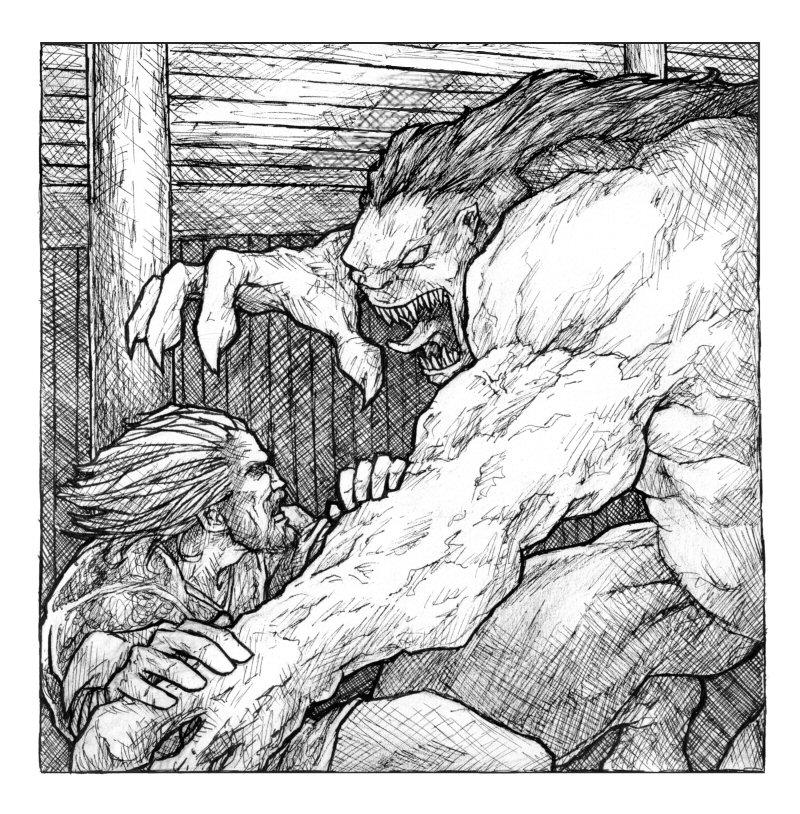
Grendel: ogro demoníaco que habitaba con su madre en una caverna en las marismas cercanas a Heorot y que, al inaugurarse el lujoso mead hall (sala para beber cerveza) con la música y el canto del bardo de Hrothgar, comenzó a acosar a los nobles que se reunían allí, y fue matándolos hasta apoderarse del salón. El poeta desliza frecuentemente comentarios que establecen una filiación directa entre Grendel y Caín. Finalmente es muerto por Beowulf en un combate individual sin armas. Por las palabras usadas en el poema para referirse a él, es posible que en los cantos antiguos fuera considerado un Jotun (un tipo de gigante de las tradiciones nórdicas).
Hroðgar: rey de Heorot, es el segundo de tres hermanos (los otros dos son Heorogar y Halga). Su nombre significa "Lanza veloz".
Madre de Grendel: Descrita como una "ogresa", aunque en la mitología escandinava todos los troles son andróginos. Es muerta por Beowulf en combate singular en el fondo de una poza en la cueva donde habitaba con Grendel.
Wiglaf: sobrino de Beowulf, le asiste en su batalla final con el dragón. A la muerte de Beowulf, éste le hereda su torque de oro y le encomienda el reino de Gëatlantt.
The Saga of a Viking Age Longhouse in Iceland
Documental completo (26 min) en torno al descubrimiento arqueológico de los restos de una casa de la época vikinga en Islandia.
Documental de la cadena danesa DR-Derede sobre Erik el Rojo, en el que Søren Ryge Petersen cuenta la fascinante historia del vikingo más famoso de todos los tiempos.
85 min. en versión original
Havhingsten bliver bygget - La construcción del Sea Stallion
Documental danés sobre la construcción del barco Sea Stallion siguiendo las técnicas antiguas. También tiene imágenes de archivo con el rescate de los barcos del fiordo de Roskilde.
Los varegos eran nórdicos que viajaron hacia el este y el sur a través de los ríos de Gardarik (lo que hoy llamamos Rusia, Bielorrusia y Ucrania), principalmente en los siglos IX y X. Podían ser comerciantes, piratas o mercenarios. En su tiempo el nombre se aplicó tanto a los nórdicos como a los eslavos que hicieron travesías parecidas por los centros comerciales de la época. El nombre proviene del nórdico antiguo Væringjar, una supuesta forma plural de várar 'promesa, palabra de honor'.




30Jan1973.jpg)